
OMEGA 3
> Home > Feeding Info > Omega 3
Both omega-3 and omega-6 are essential fatty acids. Fatty acids are the building blocks of the fat in the horse’s body, as well as the fat in the food that horses eat. EFA’s are essential because the horse’s body can’t make them, and the body needs them – both of them.
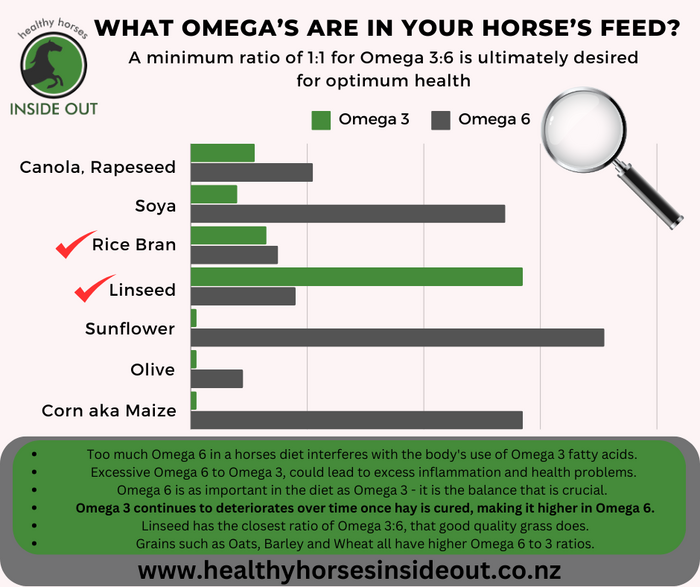
Most important of the omega-3 family are EPA, DHA, and ALA (Alpha-linolenic acid). EPA and DHA are found almost exclusively in fish, whilst ALA is found predominantly in leafy plants and flaxseed. The primary source of omega-6 in the diet is LA (linolenic acid), which comes from the oils of seeds and grains such as corn, sunflower, soya. Horses diets typically are top heavy in Omega 6 as these feature abundantly in their diets especially if feeding processed premixed feeds.
The balance between the omega-3 and omega-6 fatty acids is important, but no one is sure on the exact ratios needed just that more omega-3 than omega-6 is desirable for optimum health. Omega-6s aren’t all bad and do play important roles in the body because some inflammation is needed for healing. However, when omega-6 overpowers omega-3 this can create a catalyst for excessive inflammation, explained in a very simplistic form.
EFA’s are a source of energy. It also is suggested that it may help with: Energy needs, Joint movement and arthritis, skin, coat and hoof quality, reproductive health, allergy & immune conditions, exercise recovery and muscle health, eye health, endocrine, respiratory & neurological issues. For specific serious inflammatory issues, look to an EPA & DHA source.
Fresh grass is a source of EFA's. Most horses do not eat enough to meet their daily needs. Any omega-3 content in hay is rapidly lost after baling. This makes the hay-based diet very high in omega-6, added to with the use of grains (corn, oats etc) and vegetable oils (Soya, Sunflower, Canola, Rice Bran etc).
Horses are herbivores so do not naturally ever eat DHA or EPA, the active forms of omega-3 found in fish oil. The best plant sources of omega-3 are flax/linseed and chia seeds which have very similar profiles to grass.
Flaxseed/Linseed contain protein necessary for tissue building and repair which contributes to the growth and maintenance of muscle mass and bone normality. It also has high levels of dietary fibre both soluble and insoluble. In addition the oil component provides the Essential Fatty Acids (EFA's) Alpha Linolenic Acid (Omega 3, ALA) and Linoleic Acid (Omega 6, LA) in balanced ratios suitable for equine needs. Linseed has a very similar omega profile to that of grass, which is the most ideal source of omegas. However most horses don't have access to good quality grass OR can not be fed large amounts of good quality grass. Linseed also has a very low sugar and starch profile which is suited for not only all horses but specifically metabolic ones - and is a recommended feed by the ecirhorse.org group.
HHIO recommends one of the following 3 options:
Fresh Crushed Linseed
Flaxseed (linseed) is also an ideal form of protein for horses. Whole flaxseed is around 30% fat and 25% protein. They are a source of soluble fibre, low in starch and sugars and are higher in phosphorus, which helps balance calcium in lucerne or grass hays.
Omega supplementation - 20g per 100kg / Weight gain/calories/protein - up to 100g per 100kg
OR
Flax Flake, Meal or Pellets
Flakes, pellets and meals are the by-product of making flaxseed oil. They have a lower fat and omega 3 profile than both oil and seeds, still a great fibre source and higher protein source. They are fed at higher rates than fresh crushed linseed.
Omega supplementation - 60g per 100kg / Weight gain with more protein - up to 150g per 100kg
OR
Cold-pressed food grade Flaxseed oil
Flaxseed oil gives more calories and omega-3 per serve than both above and is a concentrated source of energy. While seeds offer a range of nutrients including fat, omega’s, fibre, protein, minerals and less calories per serve compared to oil.
Omega supplementation - 10ml per 100kg / Weight gain/calories/protein - as needed
Note: Metabolic horses and older horses in general can not process high levels of fat - stick to the omega supplementation levels and utilise other feed ingredient recommendations if weight gain or condition needed.
Inflammation busting: For horses with arthritis, skin conditions, allergies, respiratory issues - Cold Pressed Flax Seed Oil is best recommended.
Our top tips around omega 3 supplementation
Our recommendation is feeding whole linseed fresh crushed, as omega 3 deteriorates once exposed to oxygen (air) and sunlight. Boiling linseeds also destroys the omega 3 content. You can crush a weeks worth at a time and place in a zip lock bag into the freezer, but no longer. Cheap coffee grinders can be purchased at Kmart for this purpose. Clients also use nutribullets to blitz.
If you aren't able to or are not prepared to fresh crush, then suggest to use pre crushed linseed together with cold pressed flaxseed (good quality human grade) so you still get the benefits of all 4 nutrients or using a flax pellet/flake product and feed higher levels. It still has a good protein, fibre, phosphorus profile but a lower omega 3 level than fresh crushed - why need to feed at higher levels.
You can also feed chia which has a similar profile. A very small number of horses do not respond well to linseed. If feeding Chia - feed at double the suggested linseed rates below.
Fresh crushing is the most economical way and guarantees the nutrient level is the freshest and highest.
Whole linseed/Flaxseed Typical Analysis On DM:
CP 22.5%
Fibre 9.9%
Fat 37.6%
Starch 6%
Total Sugars 2.9%
Energy 27 MJ/kg
Phosphorus 6.3g per kg
Calcium 3g per kg
Omega 3 53.8%
Omega 9 20.2%
Omega 6 14.7%
Vitamin E 3.4mg/kg
Analysis from feedtables source. Subject to individual product.
Save with a bulk 25kg whole linseed bag:
Most horse feed stores have - make sure it is whole linseed and not pre-crushed. PGG wrightsons and Farmlands are usually able to source if they don't stock already. Bay of Plenty - Rotorua Farmlands stock and will continue to do so if demand is there. They are able transfer to other stores so be sure to check that option with the staff of your store.
Other known places to stock whole linseed:
Feed central cambridge - Linseed – FEED CENTRAL
Real Food Direct - Linseed Whole – Real Food Direct
Seeds & Cereals - LINSEED/FLAXSEED – Seeds & Cereals (2000) Ltd (seedscereals.co.nz)
Davis trading - Davis Food Ingredients | Davis Food Ingredients | New Zealand's Leading Food Importer and Distributor
Tauranga EQ72 - WHOLE LINSEED (20KG) – EQ72
This product should be stored in a cool and dry place out of direct sunlight. Store at less than 20°C, in a cool, dry and pest free environment.


THE OVERLOOKED BALANCE - OMEGA 3
In depth user friendly information on why we target an ideal omega 3:6 balance of 1:1, and how to go about doing this.